

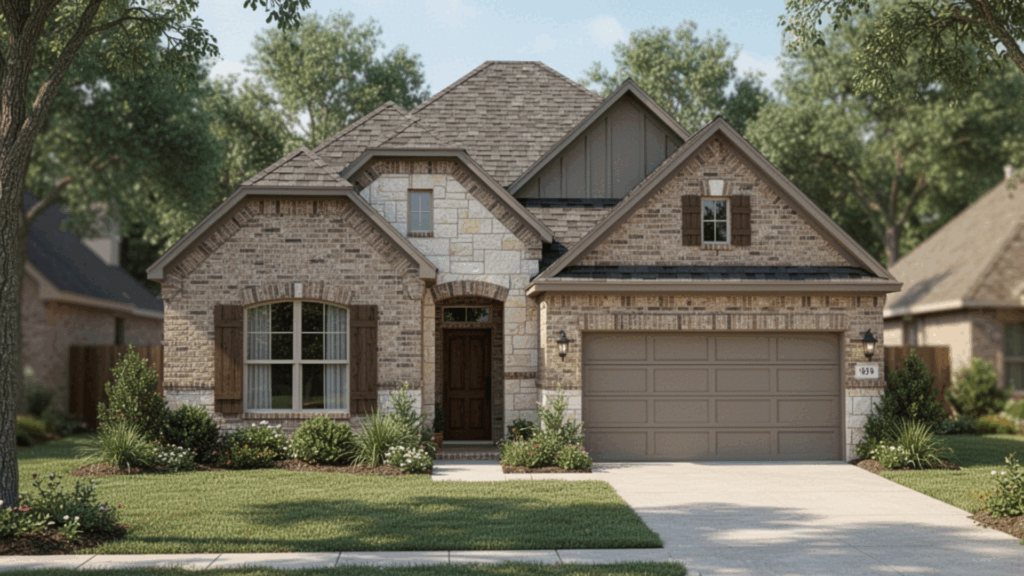
As the Houston real estate market continues to evolve in early 2026, a central question for buyers, sellers, and investors revolves around pricing realities in key submarkets such as Spring Branch and Cypress. Both areas have distinct market dynamics, geographic advantages, demographic profiles, and price trends that influence their position in the broader Houston Real Estate Market.
In a region where inventory levels have grown, pricing expectations are adapting. Buyers are scrutinizing value and competitive market positioning more closely than in the past few years. Sellers are weighing price adjustments against longer days on market. For investors, understanding whether listings are priced appropriately shapes decisions on investment properties, rental yield potential, and long-term capital appreciation.
This article provides a detailed, data-driven assessment of whether listings in Spring Branch and Cypress are priced right for today’s market, offering actionable insights for all segments of the real estate community.
TLDR Summary
• Overall Houston prices are moderate compared to coastal markets, though pricing has softened slightly in some areas
• Spring Branch listings exhibit a broad price range with mixed demand signals and slower sales cycles
• Cypress listings show resilience with moderate price adjustments and relatively stable sales-to-list metrics
• Buyers are increasingly price-sensitive, leading to longer days on market and more negotiation leverage on over-priced homes
• Inventory remains healthy across the Houston metro, requiring thoughtful pricing to attract offers
• Entry-level and mid-range markets (including parts of Cypress) deliver stronger turnover compared to higher-end listings
• Flood risk and insurance considerations continue to factor into buyer valuation, especially in older communities
• Long-term demand remains anchored by Houston’s economic growth and relative affordability
Core Market Analysis
Houston Market Context
Assessment of Spring Branch and Cypress pricing begins with broader Houston market conditions. Recent data show that the median home price in Houston is near $260,000, with a slight year-over-year decline in some metrics. Inventory is not scarce, and buyers have more choices than during the peak competition years of the pandemic. Days on market have lengthened compared to prior periods, suggesting a market where realistic, value-based pricing is critical.
The shift toward a more balanced market, where sellers may need to adjust pricing modestly, underscores the importance of strategic valuation.
Location and Demographic Overview
Spring Branch
Spring Branch is located in west Houston, just west of Interstate 610 and east of Beltway 8. Its central positioning provides convenient access to Downtown Houston, the Energy Corridor, and Memorial, making it highly attractive for buyers prioritizing commute times and proximity to employment centers.
The area has an estimated population of approximately 35,000 to 40,000 residents, with a diverse mix of long-time homeowners, new construction buyers, and ongoing redevelopment activity.
As of 2026, the average home price in Spring Branch is typically in the mid $600,000s, though values vary widely. Entry-level homes and tear-down properties may fall below $400,000, while newer construction and luxury homes often exceed $1 million.
Cypress
Cypress is a large suburban area located northwest of Houston along Highway 290. Known for its master-planned communities, newer housing stock, and strong school districts, Cypress attracts families, professionals, and investors seeking long-term suburban stability.
Cypress has a significantly larger population, with over 200,000 residents across its broader area, reflecting rapid growth and continued suburban expansion.
In 2026, the average home price in Cypress generally falls in the low to mid $500,000s, with entry-level homes starting around $300,000 and larger homes in master-planned communities reaching $700,000 or more.
Spring Branch Pricing Dynamics
Spring Branch encompasses a diverse range of housing products. Listings span from more affordable, smaller homes to larger properties with significant lot sizes. Recent aggregated data shows:
Average list prices often cluster around the mid $600,000s
Active sale ranges reflect widespread values, from under $100,000 to nearly $3 million
Median sale timing indicates homes are selling in approximately 133 days on market on average, a clear shift away from rapid turnover
Comparative pricing within Spring Branch, such as Spring Branch Gardens with median sales near $345,000, highlights how sub-neighborhood differences influence seller expectations.
This wide pricing range reflects both its central location and ongoing redevelopment, where older homes coexist with new construction at significantly higher price points.
Pricing Implications – Spring Branch
Spring Branch remains appealing due to its proximity to central Houston, established infrastructure, and diverse housing stock. However, pricing must align with condition and comparative comps. Homes priced aggressively within the median band tend to perform better, while over-priced listings may linger, leading to reductions and delayed closings. Market participants should scrutinize comparable sales closely and consider broader competitive market signals when pricing or bidding.
Cypress Pricing Landscape
Cypress is positioned as one of Houston’s more robust mid-range suburban markets, characterized by:
A sizable inventory offering depth and variety, with average list prices in the low $500,000s
Modest price reductions alongside strong sales-to-list ratios near 97%, indicating buyers are often willing to transact close to asking
Moderate days on market (around 55), signaling active buyer participation
The more consistent pricing band in Cypress is driven by newer developments, larger-scale communities, and more uniform housing inventory.
Pricing Implications – Cypress
Cypress listings generally reflect realistic pricing for their segment, particularly when compared against regional benchmarks. The slight downward adjustments in price and price-per-square-foot metrics indicate sellers are calibrating to current demand. For buyers, this translates into opportunities to secure value in a stable growth corridor. Investors seeking rental or appreciation potential may find Cypress holds relative pricing stability without excessive competition.
Market Context and Current Trends
Supply and Demand Pressures
National and regional indicators show housing shortages persist, but supply has increased meaningfully in the Houston area. Expanded inventory levels have helped balance negotiating power between buyers and sellers.
Such conditions slow unwarranted bidding wars in much of the city, including Spring Branch and Cypress. Buyers with financing constraints, including concerns about flood risk and flood insurance, can exert more leverage when properties remain on market beyond typical cycles.
Neighborhood Stratification
Pricing in Spring Branch must take into account internal neighborhood variation. Established pockets with older inventory often need competitive pricing relative to new builds or renovated homes. By contrast, Cypress success often correlates with community amenities, newer construction, and draws such as school districts and open space.
Buyer Sensitivity
Many buyers report sharper sensitivity to price discrepancies, especially for homes priced above local comps. Listings that capture value—such as pricing slightly below competing listings or aligning square-foot metrics with recent sales—tend to attract offers. Listings priced at or above current comps without unique value add often experience extended listing periods or reductions.
Pros and Cons: Pricing in Spring Branch vs. Cypress
Spring Branch
Market Turnover: Slower
Pricing Bandwidth: Wide
Buyer Demand: Value-sensitive
Investment Appeal: Potential near city core
Pricing Risk: Overpricing leads to longer days on market
Cypress
Market Turnover: Moderate
Pricing Bandwidth: Moderate, more consistent
Buyer Demand: Stable
Investment Appeal: Balanced long-term growth
Pricing Risk: Pricing closer to comps yields faster sales
Key Considerations
Spring Branch carries potential for price growth due to its central location but requires disciplined pricing strategies.
Cypress shows pricing that aligns closely with market expectations, making it attractive for buyers and investors focusing on mid-range value and stability.
Frequently Asked Questions
Where are Spring Branch and Cypress located?
Spring Branch is a centrally located west Houston neighborhood near major business districts, while Cypress is a fast-growing suburban area northwest of Houston known for master-planned communities.
What is the population difference between the two areas?
Spring Branch has an estimated population of around 35,000 to 40,000 residents, while Cypress is significantly larger, with over 200,000 residents.
Are Spring Branch listings overpriced compared to Houston’s median?
Spring Branch pricing varies across sub-neighborhoods, but many listings are above the Houston median. Proper comparative analysis is essential.
Is Cypress pricing more favorable to buyers than Spring Branch?
Generally, Cypress reflects pricing closer to regional norms, with modest price adjustments and strong list-to-sale ratios.
How should buyers evaluate whether a listing is priced right?
Compare recent sold comps, adjust for condition and amenities, and consider flood risk influences on insurance costs.
Do longer days on market always signal pricing issues?
Often, yes. Listings exceeding typical market timeframes may indicate overpricing or mismatched expectations.
Should investors favor one area over another?
Investment strategy should align with risk tolerance and goals. Spring Branch may offer upside near central markets, while Cypress provides scale and stability.
How does flood risk factor into pricing and buyer decisions?
Flood exposure influences insurance costs and resale values. Properties without mitigation may require pricing concessions.
In 2026, both Spring Branch and Cypress reflect the evolving dynamics of the Houston Real Estate Market. Spring Branch demands careful pricing calibration due to its wide value range and redevelopment activity, while Cypress demonstrates more consistent pricing aligned with suburban demand and newer housing supply.
Accurate pricing remains a cornerstone of successful transactions. Buyers, sellers, and investors who ground decisions in local data, neighborhood comparisons, and broader market trends are best positioned to achieve strong outcomes. Understanding how location, population scale, and pricing structure interact ensures smarter real estate decisions.
For expert insight and hands-on guidance in Houston’s competitive housing market, reach out to Natasha Carroll Realty, your trusted resource for finding the right property and making confident investment decisions.
https://www.natashacarrollrealty.com/
Natasha Carroll | License #0534175
Call or text (832) 346-7631