

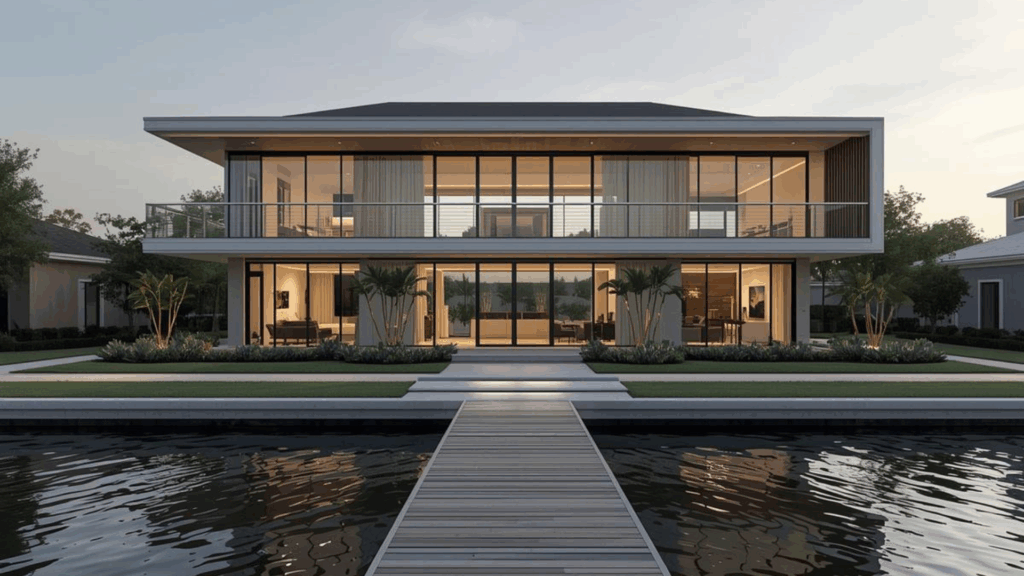
Waterfront property holds a strong position in the Houston real estate market, particularly in coastal and bayfront areas stretching from Galveston to Clear Lake Shores. These homes offer direct water access, scenic views, and a level of exclusivity that is difficult to replicate in inland neighborhoods such as Bellaire, Katy, or The Woodlands.
Flood risk, insurance costs, and long term climate considerations now play a central role in how buyers, sellers, and investors evaluate these properties. Following major storm events such as Hurricane Harvey, buyer behavior in Texas has shifted toward a more analytical and data driven approach.
For anyone considering waterfront property in Houston, the decision involves more than location and aesthetics. It requires understanding pricing trends, insurance structures, elevation data, local infrastructure, and how each micro market behaves over time. Access to local amenities, commercial developments, and landmarks also influences both lifestyle appeal and long term property value.
TLDR Summary
- Waterfront properties in Galveston and Clear Lake Shores command premium pricing but carry measurable flood risk
- Flood insurance costs can significantly impact affordability and long term ownership expenses
- Elevated construction and newer homes perform better in both resale value and insurance costs
- Buyer demand remains strong, especially for investment and second home use
- Galveston attracts investors and short term rental buyers, while Clear Lake Shores attracts primary residents
- Zoning regulations, building codes, and coastal restrictions affect redevelopment potential
- Suburban markets like Pearland and Richmond offer lower risk alternatives with strong population growth
- Long term value depends on infrastructure improvements, elevation, risk mitigation strategies, and proximity to commercial hubs, landmarks, and services
Main Analysis
The Appeal of Waterfront Property in Houston
Waterfront homes across Galveston, Clear Lake Shores, and Lake Conroe attract buyers who prioritize access, views, and recreational use. These properties often include private docks, canal access, or beachfront positioning, which significantly increases their desirability.
Galveston has a population of roughly 50,000 residents, but its real estate market extends beyond local demand. It is one of the most active vacation and short term rental markets in Texas. Areas such as the Seawall, East Beach, and Jamaica Beach attract investors due to strong seasonal rental income. Landmarks like the Galveston Historic Strand District, Moody Gardens, and Schlitterbahn Galveston Island Waterpark contribute to both tourism and local real estate demand. Waterfront homes here typically range from 450,000 to over 1.5 million, with luxury homes exceeding 2 million depending on location and elevation.
Clear Lake Shores has a population just under 2,000 residents, but it plays an outsized role in the waterfront segment. Located near NASA Johnson Space Center, the Kemah Boardwalk, and commercial hubs like Clear Lake City office parks, it attracts professionals and long term residents. Homes here generally range from 350,000 to 900,000, with premium properties offering direct canal access and updated construction.
Lake Conroe, north of Houston, serves as another key waterfront market with a mix of primary homes and vacation properties. Its proximity to The Woodlands Mall, San Jacinto River, and Montgomery County commercial developments supports both lifestyle and investment appeal. Prices range from 300,000 to over 1.2 million depending on lake access and community amenities.
Compared to inland neighborhoods like Spring Branch or Kingwood, waterfront properties consistently command higher price per square foot due to limited supply, unique location, and access to recreational and commercial amenities.
Flood Risk and Insurance as Core Decision Factors
Flood risk is the most important variable in evaluating waterfront property in the Houston real estate market. Large portions of Galveston County and coastal Harris County fall within high risk flood zones according to FEMA classifications.
Insurance costs reflect this reality. In moderate risk zones, flood insurance premiums may range from 800 to 2,000 annually. In higher risk coastal areas, particularly near open water, premiums can exceed 4,000 or even 6,000 per year depending on elevation and construction type.
Elevation is one of the most critical factors influencing both insurance cost and resale value. Homes built above base flood elevation or constructed on pilings tend to perform better in the market. Buyers increasingly request elevation certificates, flood history reports, and insurance quotes before making offers.
This has created a more technical environment where experienced agents and listing agents play a critical role in presenting properties accurately and guiding buyers through risk evaluation.
Neighborhood and Market Differences
Waterfront communities operate differently from traditional Houston neighborhoods.
Galveston is heavily influenced by tourism, short term rentals, and second home ownership. Properties often see higher turnover and fluctuating demand based on seasonality. Investors dominate certain segments, especially near beachfront areas. Local businesses and attractions, such as Pier 21, Galveston Island Historic Pleasure Pier, and popular seafood restaurants like Gaido’s, strengthen the market by driving tourism and rental demand.
Clear Lake Shores functions more as a residential community. Its proximity to NASA Johnson Space Center, Kemah Boardwalk, and commercial office hubs creates a stable base of primary homeowners. Local marinas, yacht clubs, waterfront dining, and hospitals like Clear Lake Regional Medical Center contribute to long term livability.
In contrast, inland neighborhoods such as River Oaks, Memorial, West University, and Tanglewood derive value from land scarcity, school zoning, and proximity to Downtown Houston and Uptown business districts. Rice Village, Galleria, and major Uptown office buildings such as Wells Fargo Plaza and Williams Tower support strong demand for luxury homes. These areas have lower flood exposure and more predictable insurance costs.
Suburban markets like Pearland and Richmond provide lower risk alternatives. Pearland has grown to over 125,000 residents and continues expanding due to proximity to Texas Medical Center, Southbelt ESD industrial parks, and highway accessibility. Median home prices range from 300,000 to 450,000. Richmond, located in Fort Bend County, has grown to over 15,000 residents and is experiencing rapid development around First Colony Mall, Fort Bend County business centers, and new commercial corridors. Homes here range from 280,000 to 500,000 depending on community and construction.
Zoning Regulations and Development Controls
Houston’s approach to zoning creates both flexibility and complexity. While there is no traditional zoning system, zoning regulations in the form of deed restrictions, city ordinances, and coastal construction requirements play a major role.
In Galveston, building codes require elevation standards, windstorm certification, and compliance with coastal construction guidelines. These factors increase construction costs but improve long term durability.
Clear Lake Shores includes restrictions related to docks, shoreline improvements, and drainage compliance. These directly affect how properties can be modified or expanded.
Understanding these rules is essential for buyers and investors, especially those considering redevelopment or long term investment strategies.
Investment Potential and Long Term Value
Waterfront property continues to attract investors despite the risks. Key drivers of long term value include limited supply, rental demand, and continued migration into the Houston area.
Galveston remains one of the strongest short term rental markets in Texas, with high occupancy rates during peak seasons. This creates income opportunities not typically available in inland neighborhoods.
Clear Lake Shores offers more stable appreciation tied to employment centers and residential demand. Its limited inventory supports consistent pricing growth.
Properties with significant flood history or high insurance costs may experience slower appreciation. Investors increasingly prioritize homes with updated construction, proper elevation, and documented flood mitigation.
Market Context and Current Trends
Houston’s population exceeds 2.3 million within the city and over 7 million in the metro area. Migration from states like California and New York drives demand across multiple market segments.
Buyer demand for waterfront property remains strong, particularly among investors and second home buyers. Remote work has increased interest in properties near water.
Inventory in coastal markets remains limited, supporting pricing stability. New construction in Lake Conroe and parts of Galveston is gradually increasing supply.
In Uptown Houston, major employers such as energy companies, financial firms, and healthcare organizations attract high income buyers. This supports luxury home markets in areas like River Oaks and Memorial, which compete indirectly with waterfront properties.
Infrastructure improvements, including drainage projects, road expansions, and flood mitigation around the Houston Ship Channel, Clear Lake, and Galveston Bay, influence buyer confidence and long term market stability.
Pros and Cons of Waterfront Property Investment
Advantages
- Strong demand driven by limited supply and unique location
- Potential for rental income in markets like Galveston
- Distinct property appeal that stands out in listings
- Access to boating, waterfront dining, and recreation
- Long term appreciation potential in well positioned properties
Considerations
- Higher flood risk compared to inland neighborhoods
- Elevated flood insurance costs that impact affordability
- Exposure to storms and weather related events
- More complex due diligence including elevation and flood history
- Resale demand may vary depending on risk perception
Frequently Asked Questions
Are waterfront homes in Houston a good investment
They can be strong investments, especially in areas with rental demand or limited inventory. Returns depend on managing flood risk, insurance costs, and property condition.
How important is flood insurance
Flood insurance is critical and often required in high risk zones. It directly affects monthly ownership costs and long term affordability.
Do waterfront homes appreciate as much as inland homes
They can, but performance depends on elevation, infrastructure, and insurance costs. Some inland areas may offer more stable growth.
What should buyers review before purchasing
Buyers should review flood history, elevation certificates, insurance quotes, and local zoning regulations before making a decision.
Are there safer waterfront options
Yes. Properties built at higher elevations or with newer construction standards generally carry lower risk.
Waterfront homes from Galveston to Clear Lake Shores occupy a unique segment of the Houston real estate market. They offer strong appeal, limited supply, and investment potential that differs from inland neighborhoods such as Katy, Bellaire, and The Woodlands.
Flood risk and insurance costs are central to how these properties are valued. Buyers and sellers who understand elevation, zoning regulations, landmarks, commercial infrastructure, and market trends are better positioned to make informed decisions.
Waterfront property must be evaluated individually, with a clear understanding of risk and long term value.
Natasha Carroll Realty works closely with buyers and sellers through detailed consultations, helping clients understand their budget, secure pre approval, evaluate flood risk, and assess long term investment potential.
Natasha Carroll Realty provides property level analysis, guidance on tax implications, and insight into how each neighborhood performs within the Houston real estate market.
For guidance in Galveston, Clear Lake Shores, or surrounding Houston neighborhoods, contact:
https://www.natashacarrollrealty.com/
Natasha Carroll | License #0534175
Call or text (832) 346-7631