

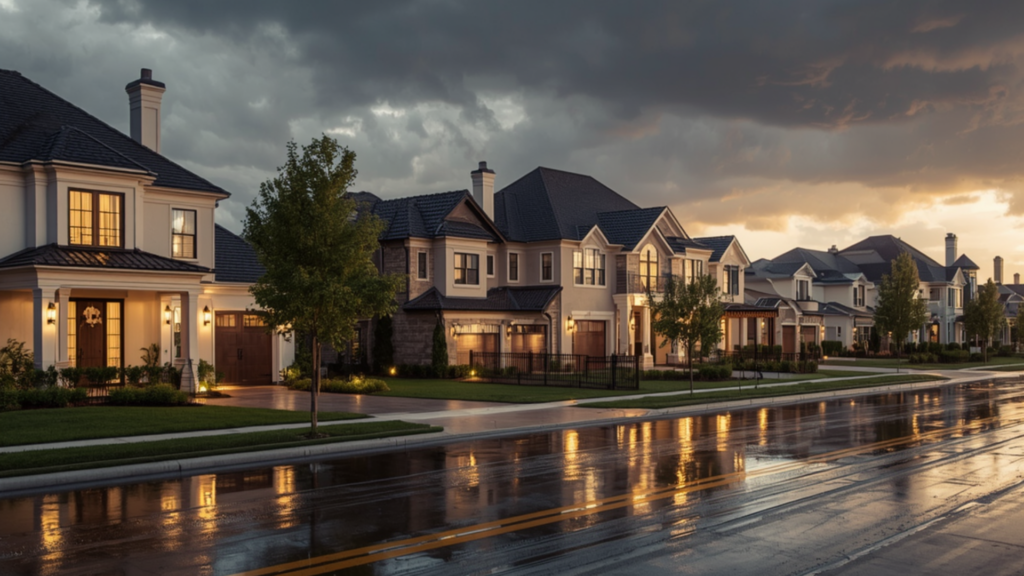
Buying a luxury home in Houston is not just about architecture, finishes, or location. One of the most important and often underestimated factors is flood insurance. After working with buyers and sellers across River Oaks, Memorial, West University, and The Woodlands, I have seen how flood risk can shape pricing, negotiations, and long term investment value. In a competitive market like Houston, understanding how flood insurance fits into the bigger picture is essential if you want to protect your investment and avoid surprises.
TLDR Summary
- Flood insurance can significantly impact the true cost of a luxury home in Houston
- Properties in higher flood risk zones may see slower appreciation and longer days on market
- Luxury buyers are more data driven and often evaluate flood history before making offers
- Premiums can range from $800 to over $6,000 annually depending on location and elevation
- Some of Houston’s most desirable neighborhoods still carry flood exposure risks
- Working with an experienced agent helps buyers assess risk, negotiate, and plan long term
How Does Flood Insurance Affect Luxury Home Prices in Houston?
Flood insurance plays a direct role in how luxury homes are priced and perceived in the Houston Real Estate Market. In areas like River Oaks, Tanglewood, and Memorial, where luxury homes often range from $1.5M to over $5M, buyers expect not only premium finishes but also security in their investment.
Homes located in lower flood risk zones tend to command stronger prices and attract more competitive offers. In contrast, properties with a history of flooding or those located in designated flood zones may be priced lower to account for increased insurance costs and perceived risk. This pricing gap can range from 5 percent to 15 percent depending on the severity of the exposure.
In Bellaire and West University, where average home prices range from $900,000 to $1.8M, flood considerations became more prominent after past storm events. Buyers today are more cautious, often requesting detailed flood disclosures and elevation certificates before moving forward.
How Does Flood Risk Vary Across Houston Neighborhoods?
Flood risk is not uniform across Houston, and this is where local expertise becomes critical. Each neighborhood presents a different profile that buyers need to evaluate carefully.
River Oaks and parts of Memorial offer some of the most sought after luxury homes in Houston, with tree lined streets and proximity to Uptown and Downtown Houston. While many properties here are in lower risk zones, certain pockets have experienced flooding in the past, making due diligence essential.
The Heights and Montrose, known for their central location and vibrant lifestyle, generally sit at slightly higher elevations. This has made them attractive for buyers concerned about flood exposure, even as home prices continue to rise beyond $700,000 to over $1.2M.
The Woodlands, with a population of around 120,000, benefits from master planned infrastructure and drainage systems. Luxury homes here, often priced between $600,000 and $2M, tend to carry lower perceived flood risk, which supports long term value stability.
In suburban areas like Katy, Cypress, and Sugar Land, rapid development has changed drainage patterns over time. While many new communities are built with updated standards, some sections still carry moderate flood risk. Pearland, now home to over 125,000 residents, and Richmond, which continues to expand, also present mixed flood profiles depending on location.
Waterfront properties near Lake Conroe and Clear Lake Shores offer a unique lifestyle appeal but come with higher exposure to flood risk and insurance requirements. Buyers drawn to these homes often factor insurance costs into their overall investment strategy.
What Does Flood Insurance Actually Cost for Luxury Buyers?
Flood insurance premiums in Houston vary widely based on elevation, proximity to water, and historical data. For luxury homes, costs are typically higher due to property value and replacement costs.
A buyer purchasing a $2M home in a low risk zone might pay around $800 to $1,500 annually. In moderate risk areas, premiums can increase to $2,000 to $4,000. In higher risk zones, especially near waterfront property or areas with prior flood claims, costs can exceed $5,000 per year.
For buyers in the Texas Real Estate Market, these costs are not just an added expense. They influence mortgage qualification, monthly affordability, and overall return on investment.
How Flood Insurance Influences Buyer Behavior in a Competitive Market
Luxury buyers in Houston are increasingly strategic. In a competitive market, flood risk often becomes a deciding factor when comparing similar properties.
Homes with no flood history and lower insurance requirements tend to receive stronger offers and sell faster. Listings with known flood exposure may require more negotiation, even if the home itself is high end. This creates opportunities for buyers who are willing to take on calculated risk, but it also requires careful analysis.
In areas near Midtown, Rice Village, and Uptown, where professionals and executives often relocate for work, buyers typically prioritize convenience and long term value. Many are relocating from out of state and rely heavily on their agent’s expertise to navigate flood related considerations.
Beyond Insurance: The Hidden Costs Buyers Often Miss
One of the most overlooked aspects of flood insurance in Houston’s luxury market is that the true cost extends well beyond the annual premium. Buyers often focus on the monthly insurance estimate, but long-term ownership costs can shift significantly depending on a property’s flood history and elevation profile. Higher deductibles, engineering reports after major storms, foundation monitoring, and drainage improvements can all become part of ongoing maintenance. Even when a home has never flooded, proximity to known waterways or reservoir systems can influence future insurance adjustments, which makes it important to evaluate not just current costs but how those costs may evolve over time.
Another key factor that shapes buyer behavior is how flood risk is perceived during the decision-making process. Luxury buyers today are far more data-driven than in previous years, especially those relocating from out of state. It is common for buyers to request elevation certificates, FEMA flood zone maps, and even third-party assessments of surrounding drainage infrastructure before feeling comfortable moving forward. In competitive situations, even small differences in perceived flood exposure can influence whether a buyer chooses to submit a strong offer or move on to a different property, particularly when multiple comparable homes are available in the same price range.
From a seller’s perspective, transparency around flood history has become increasingly important. Homes that clearly document past repairs, elevation improvements, or drainage upgrades tend to perform better in negotiations than those where information is incomplete or unclear. In some cases, sellers who invest in pre-listing inspections or provide detailed engineering reports are able to reduce buyer hesitation and shorten time on market. In Houston’s higher-end neighborhoods, where buyers expect a high level of disclosure, clarity often translates directly into stronger pricing power.
It is also important to understand how infrastructure and geography interact across Houston’s luxury neighborhoods. Areas near Buffalo Bayou, Brays Bayou, and other major drainage systems have seen varying levels of impact over the years, even within the same subdivision. A street that sits just a few feet higher in elevation can experience significantly different outcomes during heavy rainfall events. This is why two homes that appear nearly identical on paper can carry very different risk profiles once elevation, soil composition, and drainage flow are taken into account. Local expertise becomes critical in identifying these nuances before a purchase is made.
Ultimately, flood insurance in Houston is not just a financial requirement but a reflection of how risk is distributed across the city’s landscape. Buyers who take the time to understand these layers are better positioned to make informed decisions, avoid unexpected costs, and choose homes that hold value over time. In a market where luxury properties are often distinguished by subtle differences rather than obvious ones, flood awareness has become one of the most important factors in long-term investment success.
How Does Flood Insurance Influence Long Term Value?
Flood insurance is becoming a more prominent factor in Houston real estate decisions. As data becomes more accessible, buyers are placing greater emphasis on flood history and insurance costs when evaluating properties.
Luxury neighborhoods like River Oaks, Tanglewood, and Memorial are expected to remain strong due to their location and desirability. However, homes with lower flood risk will likely outperform others in terms of appreciation and demand.
Emerging areas such as Richmond and Pearland are seeing increased interest as buyers look for newer homes with updated infrastructure. At the same time, The Woodlands continues to benefit from corporate relocations and its reputation for stability.
With ongoing development in Uptown Houston and the presence of major companies driving job growth, demand for housing across multiple neighborhoods remains strong.
FAQs
Do all luxury homes in Houston require flood insurance?
Not all homes require it, but many lenders will require flood insurance if the property is located in a designated flood zone.
Is it risky to buy a home in a flood zone?
It depends on the specific property. Some homes are built with elevation and drainage features that reduce risk, but buyers should always review flood history and insurance costs.
Can flood insurance affect resale value?
Yes, higher insurance costs and flood history can influence how future buyers perceive the property.
Are newer homes less likely to flood?
Newer homes often follow updated building standards, but location still plays a major role in determining flood risk.
How can a Realtor help with flood related decisions?
An experienced Realtor provides access to data, helps interpret flood maps, and guides buyers through the financial and practical implications of flood insurance.
Flood insurance is not just a line item in your budget. It is a key factor that shapes how luxury homes are priced, marketed, and ultimately sold in Houston. Buyers who take the time to understand flood risk are better positioned to protect their investment and make confident decisions.
If you are exploring the Houston market, whether in River Oaks, The Heights, Katy, or The Woodlands, having the right guidance matters. I work closely with buyers to break down the numbers, explain the risks, and identify opportunities that align with their goals.
If you are ready to take the next step or simply want clarity on your options, let’s connect and map out a strategy that works for you.
https://www.natashacarrollrealty.com/
Natasha Carroll | License #0534175
Call or text (832) 346-7631